
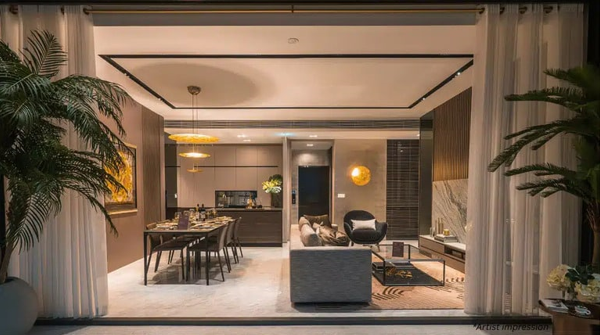
In Singapore’s high-density urban environment, space is a finite resource. As a result, the effectiveness of space planning has become far more important than sheer size. Residential flexibility is ultimately a product of thoughtful space planning, making it one of the most critical factors in modern housing design.
Space planning determines how residents interact with their homes on a daily basis. Poorly planned layouts create friction, waste space, and limit adaptability. Well-planned homes, by contrast, feel intuitive, efficient, and adaptable over time.
Planning for Change, Not Just Occupancy
Traditional space planning often focused on immediate occupancy needs. Rooms were assigned fixed purposes, and layouts assumed static lifestyles. Today, effective planning anticipates change.
Flexible planning allows rooms to serve multiple functions without structural modification. Proportions are carefully considered so that spaces can be repurposed as needs evolve. This foresight distinguishes adaptable homes from those that become obsolete.
Developments such as Vela Bay demonstrate how intelligent planning enhances long-term usability. Instead of emphasizing novelty, the focus is on layouts that remain practical across different life stages. This approach supports continuity and reduces the need for disruptive renovations.
Circulation Efficiency and Functional Flow
One often overlooked aspect of flexibility is circulation. Efficient movement paths reduce wasted space and improve adaptability. When circulation is well planned, rooms can be reconfigured without disrupting overall flow.
Flexible homes prioritize clarity in layout. Residents can redefine spaces without compromising accessibility or comfort. This makes adaptation feel natural rather than forced.
Shared Spaces as Extensions of the Home
At the estate level, thoughtful planning extends flexibility beyond individual units. Shared amenities effectively expand living space by providing residents with access to functions that do not need to be duplicated within each home.
Tengah Garden Residences exemplifies this principle through integrated planning. Communal spaces, green corridors, and recreational facilities reduce reliance on oversized private units while enhancing lifestyle quality.
Planning as a Sustainability Strategy
Thoughtful space planning also supports sustainability. Homes that adapt easily reduce renovation cycles, material waste, and energy consumption. This alignment between flexibility and sustainability makes intelligent planning a long-term value driver.
Ultimately, space planning is not about fitting more into less. It is about designing homes that work better, longer, and with greater resilience.