
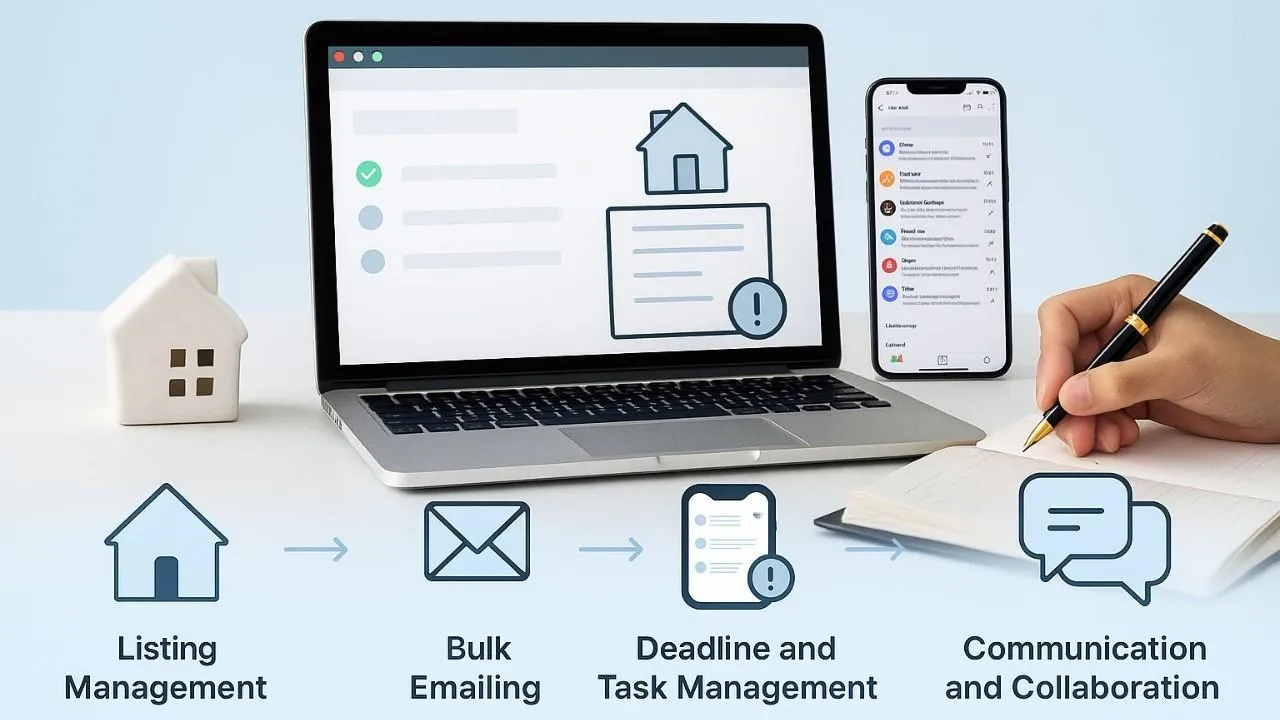
The job of a transaction coordinator looks very different today than it did a few years ago. Real estate deals move fast. Expectations are higher. There are more documents, more deadlines and usually more people involved than anyone would prefer.
Because of that, many professionals are turning to real estate transaction coordinator software and modern transaction coordinator software solutions. These tools are not just helping people stay organised. They are changing the way transaction coordination works from the ground up.
The Growing Pressure on Transaction Coordinators
A transaction coordinator helps keep a real estate deal moving from start to finish. Sounds simple enough. In reality, it rarely feels simple. There are contracts to track. Documents to collect. Deadlines to watch. Messages coming from every direction. Buyers need updates. Agents need answers. Lenders need paperwork.
Now multiply that across several active transactions. Without a reliable system in place, transaction issues can arise quickly. Missing a report or a closing date can create delays that affect every organisation involved.
Why traditional methods are falling behind
For years, many coordinators relied on spreadsheets, sticky notes, email folders and outdated checklists. These methods were manageable when handling a smaller number of transactions. The stress is that real estate has become more complex. Information often ends up scattered across different places. A file sits in one folder. Notes live somewhere else. Important emails disappear beneath dozens of newer messages.
Before long, finding one piece of information can feel like looking for a house key that somehow vanished inside your own pocket. That lack of visibility makes daily work harder than it needs to be.
How Real Estate Transaction Coordinator Software Simplifies Daily Work
This is where real estate transaction coordinator software makes a noticeable difference. Instead of switching between multiple tools, coordinators can manage tasks, documents, communication and deadlines from one location. Everything stays connected. Everything stays easier to find.
The software creates structure around the transaction process without making work feel rigid or complicated. That matters when several deals are moving at different stages and each one requires attention.
Transaction Coordinator Software Has Come a Long Way
Early systems focused mostly on task tracking. Helpful, yes. But fairly limited. Today’s transaction coordinator software does much more than that. Many platforms include document storage, automated workflows, communication tracking and real-time transaction updates.
Some solutions now use artificial intelligence to pull information from documents automatically. Others can flag missing details or create task lists based on uploaded contracts. The technology keeps improving, but the goal remains fairly simple. Reduce manual work and make coordination easier.
Benefits That Reach Beyond the Coordinator
The advantages are not limited to transaction coordinators alone. For coordinators, organisation becomes easier. They spend less time searching for information and more time managing transactions effectively. Agents benefit too. Better coordination often means fewer delays and smoother communication throughout the deal.
Brokerages gain greater visibility across active transactions. Managers can quickly see where deals stand without having to request updates from multiple team members. Everyone is working from the same information, which helps reduce confusion and miscommunication.
Why automation is so important
Automation is considered one of the biggest drivers of the growth of those platforms. Think about how many routine tasks happen during a transaction. Sending reminders. Creating checklists. Assigning responsibilities. Tracking deadlines. Individually, they seem small. Together, they consume a surprising amount of time.
Modern transaction coordinator software can handle many of these repetitive actions automatically. When a new transaction starts, tasks can be created instantly. Notifications can be sent without manual follow-up. The result is a workflow that feels smoother and more predictable.
How Trackxi Reflects This Shift
The platforms that comprise trackxi are a new era of real estate transaction coordinator software applications. Rather than acting as a convenient monitoring tool, they bring together automation, collaboration, reporting management and workflow visibility within a single platform.
Coordinators, agents and various members can view external updates, percentage statistics and monitoring responsibilities while constantly moving between separate structures. That level of coordination helps reduce errors and makes it easier to manage transactions from contract to closing.
What the Future May Look Like
Technology continues to move forward and transaction coordination is moving with it.
Future versions of transaction coordinator software will likely become even smarter. Systems may identify potential delays before they happen. They may recommend actions based on transaction activity or automatically highlight compliance concerns.
Artificial intelligence is expected to play a larger role in document review, workflow management and transaction forecasting. While no software can replace human judgement completely, it can remove much of the repetitive work that slows people down.
Conclusion
The real estate industry continues to evolve, and transaction coordinators are managing more responsibilities than ever before. The real estate transaction coordinator software gives professionals the tools they need to stay organised, manage deadlines, improve communication and reduce manual effort. At the same time, modern transaction coordinator software provides greater visibility across every stage of a transaction. As deal volumes continue to grow, these platforms are becoming less of a convenience and more of a necessity. Businesses that adopt them now will be better prepared for the demands of an increasingly competitive market.